
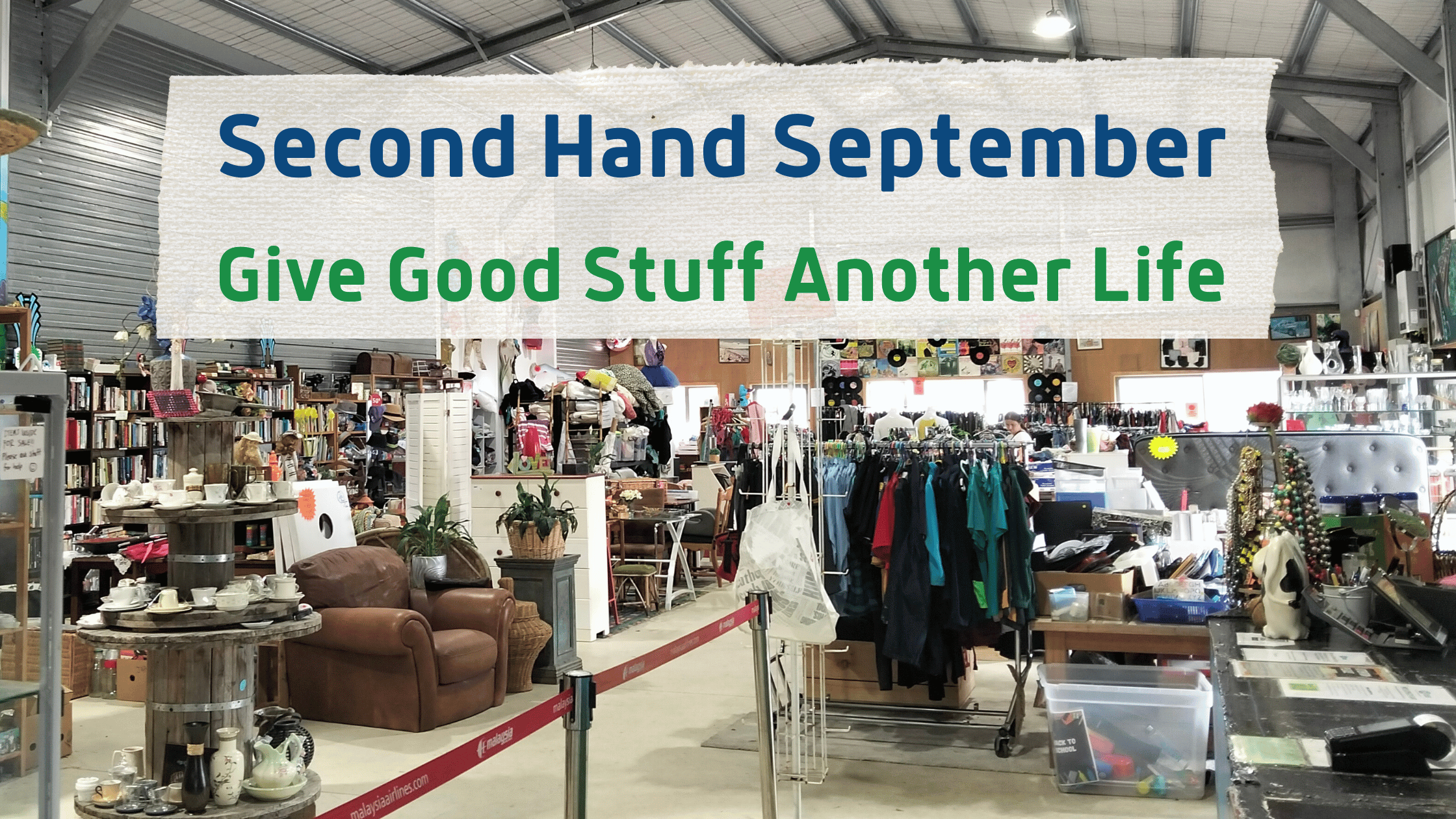
September is a great month to rethink the way we shop — and discover just how much we already have.
You’ve probably heard of Second Hand September — an annual campaign encouraging people to choose pre-loved items rather than buying new, particularly when it comes to clothing.
But here at Waiuku Zero Waste, we reckon the idea goes much further than what’s hanging in your wardrobe.
Because second-hand isn’t just about finding a bargain. It’s about keeping useful things in use. And that’s something we can all do.
Why buy second-hand?
Every new product starts with resources. Raw materials need to be extracted. Products need to be manufactured, packaged and transported. Energy and water are used along the way — and eventually, that product may end up as waste.
When we choose something that’s already been made, we’re not creating demand for another brand-new item. We’re giving an existing item another chance to be useful. That might mean buying a pre-loved jumper instead of a new one. Finding a second-hand bookshelf for the spare room. Picking up a previously loved toy for the kids. Buying a used bike. Or choosing a second-hand garden tool rather than adding another new one to the shed.
It’s a small shift in thinking:
Before I buy new, what’s already out there?
Second-hand doesn’t mean second-best
There’s a bit of a perception that buying second-hand means settling for something inferior. We don’t agree. Second-hand shopping can mean finding things that are better made, more unusual or interesting, and cheaper. You might find an old-school kitchen appliance that was built to last. A piece of furniture with more character than anything brand new. A vintage jacket that nobody else in town is wearing. Or a perfectly good tool that someone else bought, used twice and then decided they didn’t need. And sometimes, yes, you’ll find something that is a complete bargain. That’s part of the fun!
Second-hand shopping is a treasure hunt.
Try the “before you buy” test
Next time you’re about to buy something, stop for 30 seconds and ask yourself these four questions:
1. Can I borrow it?
If you’re only going to use something occasionally, do you really need to own it? Our Waiuku Community Workshop & Tool Library and the Waiuku Predator Trap Library are based on exactly this idea. Instead of everyone buying and storing their own tools, members can borrow what they need when they need it. Less stuff to store. Less money spent. More sharing.
2. Can I find it second-hand?
Check your local reuse shop, community groups, online marketplaces, garage sales or other second-hand sources. And don’t just think clothing. Think furniture, books, kitchenware, toys, sports gear, tools, homewares and all those other things that already exist in abundance.
3. Can I repair what I’ve already got?
Sometimes we don’t actually need a replacement. We just need a repair. A missing button. A split seam. A broken handle. A loose screw. A bicycle that needs a little attention. Our monthly Repair Café and community workshops are all about helping people explore what’s possible before something becomes waste. And there’s something pretty satisfying about fixing something yourself.
4. Do I actually need it?
This might be the hardest question of all! We’re surrounded by advertising telling us what we need next. But sometimes the most sustainable purchase is the one we don’t make. Wait a day. Check the cupboard. Borrow one. Look for one second-hand. You might discover you didn’t need it after all.
And what about the things you no longer need?
Second-hand isn’t just about buying. It’s also about passing things on. If something is still usable but you no longer need it, someone else might. That’s where reuse shops like The Junktion Reuse Shop come in.
Recently, our four-day free kids’ clothing sale saw an incredible 1,159 items leave the shop and find new homes. One customer alone took 500 items to send to children in the Islands. That’s a pretty powerful example of what happens when we keep things moving. Instead of sitting unused in a cupboard, instead of going into the rubbish, instead of buying another new item, good stuff gets another life.
But please donate responsibly
One important part of reuse is making sure we’re passing on things that are genuinely reusable. Before filling a donation bag, have a quick check.
Ask yourself:
Would someone actually want this in its current condition? If clothing is smelly, torn, full of holes or otherwise beyond wearing, it isn’t suitable for the Junktion Reuse Shop or any op shop. And please don’t put underwear in your donation bags.
For household items, the same principle applies. If a pot or pan is scratched or damaged and you wouldn’t buy it yourself, it may be better suited to recycling rather than the shop. For example, scratched pots and pans can be placed in our metal recycling bin free of charge.
A good donation isn’t simply something you don’t want anymore. It’s something that still has a useful life.
Make September your second-hand starting point
You don’t need to completely change the way you shop overnight. Start small. This month, try choosing one thing second-hand that you would normally have bought new. Or make a commitment to repair one item you’ve been meaning to fix. Borrow a tool instead of buying one. Pass something useful on to someone who needs it. Or simply spend a little longer thinking before you buy.
Because the goal isn’t to buy better things. It’s to buy less, reuse more and keep the things we already have in circulation for longer.
This September, before you buy…
Borrow it.
Buy it second-hand.
Repair it.
Reuse it.
And if you really do need something new — make it something you’ll love and use for a long time.
That’s how small everyday choices start to add up.
And once September is over? Well, there’s no reason to stop.
Reuse. Repair. Recycle.
Giving pre-owned items another life makes sustainable consumption feel practical, social, and less dependent on buying new.